|
Mise
jour :
16-01-2026
Promouvoir le concept d' covillage en Afrique
Ecovillage Movement
in Africa
-------------------------------------------------------
Navigation
Previous / Home / Heading / Next
--------------------------------------------------------------------------
Au Bangladesh, les "Info Ladies"
apportent Internet dans des villages isol s
Le projet est le fruit d'une ONG de d veloppement local, D.Net, lanc e en 2010. Outre une connexion Internet, les "Info Ladies", des
jeunes femmes, elles-m mes d'origine rurale, apportent une flop e de services,
payants ou gratuits. Elles parlent de sujets tabous avec les jeunes filles,
comme la contraception et le sida, aident les villageois crire des lettres de
plainte aux autorit s, ou sensibilisent les fermiers au bon usage des
fertilisants et des insecticides - L op ration n est pas purement
caritative. Les "Info Ladies" sont la fois des entrepreneuses et des
fournisseuses de services publics. En 2012, la banque centrale du Bangladesh a
accept d octroyer des pr ts sans int r t pour aider ces auto-entrepreneuses
payer leur mat riel.
https://observers.france24.com/fr/20140806-bangladesh-info-ladies
PDF
https://www.gsgvelbert.de/wp-content/uploads/2020/03/Ab_8c.pdf
https://dnet.org.bd/
iSocial has been working for building a network
of women microentrepreneurs across the country named Kallyani
https://isocial.com.bd/
Info Ladies in Bangladesh
https://www.theguardian.com/global-development/2013/jul/30/bangladesh-bikes-skype-info-ladies
Internet Saathi an initiative to empower women and their communities in
rural India by enabling them to use the Internet and benefit from it in their
daily lives.
https://youtu.be/iYVx15KEEEs
L autonomisation des femmes dans les soci t s pastorales
par Fiona Flintan - sept 2008 tude 166 pages - tude sur les bonnes
pratiques
https://www.iucn.org/sites/default/files/import/downloads/gender_study_french_1.pdf
 Autonomisation des femmes dans les soci t s pastorales-2008.pdf
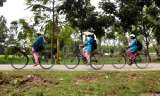 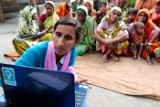 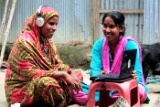 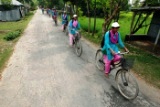
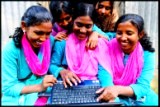 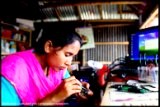 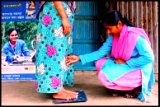 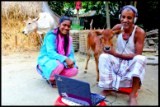 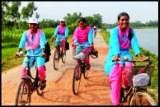
INFO Ladies of Bangladesh in English
The Info Ladies cover many miles on their journeys from village to village. With
their bicycles and laptops, the Info Ladies of Bangladesh bring the world a
sense of independence from one village to the next. This has changed the
country, and their lives, too. The young women have become role models for a
whole generation.
.... voir aussi :
TIC - Alphab tisation et formation des femmes
Ecole - Eduquer
empowerment des femmes
FRANCAIS:
JHARABARSHA, Bangladesh (Sipa-AP) -- Il y a quelques ann es encore, Amina Begum
n'avait jamais vu d'ordinateur. Aujourd'hui, cette villageoise du Bangladesh
discute r guli rement par vid o-t l phonie sur le Web avec son mari expatri .
Une op ration rendue possible par le projet "Info Ladies", cr en 2008 par
D.Net, impliqu dans le secteur du d veloppement, en coop ration avec d'autres
organismes.
Pr s de 60 "Info Ladies" p dalent jusqu'aux villages recul s de 19 des 64
districts que compte le Bangladesh pour apporter une connexion Internet des
dizaines de milliers d'habitants -surtout des femmes. Elles les aident acc der
aux services publics en ligne ou communiquer avec leurs proches. Une
possibilit pr cieuse dans un pays o seulement 5 des 152 millions d'habitants
ont acc s Internet.
Recrut es par D.Net, les "Info Ladies" sont form es pendant trois mois
l'utilisation d'un ordinateur, d'Internet, d'une imprimante et d'un appareil
photo. L'entreprise les aide ensuite contracter un pr t pour acheter v lo et
quipement. "De cette fa on, nous fournissons un travail des femmes sans
emploi et, en m me temps, nous donnons acc s des informations primordiales aux
villageois", explique Ananya Raihan, directeur g n ral de D.Net.
L'op ration n'est pas purement caritative. Pour parler son mari qui travaille
en Arabie saoudite, Amina Begum d bourse 200 takas (1,9 euro) pour une heure de
connexion. Sathi Akhtar, une "Info Lady", dispose, elle, de 10.000 takas (96,7
euros) une fois son pr t de 120.000 takas (1.160,2 euros) rembours . C'est plus
qu'elle ne gagnerait en tant ma tresse d' cole, dit-elle.
Une ouverture sur le monde
Amina Begum sourit timidement lorsque le visage de son mari appara t sur
l' cran. Elle lui raconte qu'elle a re u l'argent qu'il lui a envoy . Il lui
r pond d'acheter des terres. La belle-m re d'Amina elle-m me s'est mise la
vid ot l phonie sur Internet pour parler avec son fils, depuis leur petite ferme
du district de Gaibandha, 192km au nord de la capitale, Dacca.
Dans le village voisin de Saghata, Tamanna Islam Dipa, 16 ans, profite de la
venue de l'"Info Lady" pour se connecter au monde. "Je n'ai pas d'ordinateur
mais lorsque l'Info Lady vient, j'utilise son ordinateur portable pour discuter
avec mes amis sur Facebook", raconte-t-elle. "Nous changeons sur les notes que
nous avons pris en cours, et parfois nous voquons des probl mes de soci t
comme les effets n fastes du mariage des enfants, la dot et les violences
sexuelles contre les filles."
Des services publics
Les "Info Ladies" apportent une connexion Internet, mais aussi une flop e de
services, payants ou gratuits. Elles parlent de sujets tabous avec les jeunes
filles, comme la contraception et le sida, aident les villageois crire des
lettres de plainte aux autorit s, ou sensibilisent les fermiers au bon usage des
fertilisants et des insecticides. Pour 10 takas (9 centimes d'euros), elles
aident les tudiants remplir leurs dossiers d'inscription l'universit sur
Internet.
"Les 'Info Ladies' sont la fois des entrepreneuses et des fournisseuses de
services publics", r sume Ananya Raihan. D.Net s'est inspir du projet de
Muhammad Yunus, le prix Nobel bangladais chantre du micro-cr dit, qui a
introduit l'usage du t l phone portable dans les campagnes en 2004 en envoyant
des cohortes de "Mobile Ladies" aupr s des villageoises qui n'avaient pas acc s
au t l phone. Aujourd'hui, plus de 92 millions de personnes ont acc s la
t l phonie mobile au Bangladesh. Ananya Raihan voit tout aussi loin: d'ici 2016,
il esp re avoir form 15.000 femmes.
Avec le soutien de D.net:
D.net a social enterprise, which envisages to use information and
communication technology (ICT) for economic development of Bangladesh.
http://dnet.org.bd/
---------------------------------
in ENGLISH
'Info ladies' go biking to bring remote Bangladeshi villages online
INFO Ladies of Bangladesh
The Info Ladies of Bangladesh: The women who bring the web
on wheels to thousands in country's remotest villages
The Info Ladies bike hundreds of miles, bringing laptop computers and internet
connections to thousands in impoverished farming villages
>> Villagers can contact loved ones via Skype, use social media
like Facebook and find out about government services
>> Vital service in a country where only five million of 152m have
internet access
>> Info Ladies also offer advice on health matters and are trained
to give blood tests
The Info Ladies cover many miles on their journeys from village
to village. With their bicycles and laptops, the Info Ladies of Bangladesh bring
the world a sense of independence from one village to the next. This has changed
the country, and their lives, too. The young women have become role models for a
whole generation.
JHARABARSHA, Bangladesh (AP) Amina Begum had never seen a
computer until a few years ago, but now she's on Skype regularly with her
husband. A woman on a bicycle brings the Internet to her.
Dozens of "Info Ladies" bike into remote Bangladeshi villages with laptops and
Internet connections, helping tens of thousands of people especially women
get everything from government services to chats with distant loved ones. It's a
vital service in a country where only 5 million of 152 million people have
Internet access.
The Info Ladies project, created in 2008 by local development group D.Net and
other community organizations, is modeled after a program that helped make
cellphones widespread in Bangladesh. It intends to enlist thousands more workers
in the next few years with startup funds from the South Asian country's central
bank and expatriates working around the world.
D.Net recruits the women and trains them for three months to use a computer, the
Internet, a printer and a camera. It arranges bank loans for the women to buy
bicycles and equipment.
"This way we are providing jobs to jobless women and at the same time empowering
villagers with critical information," said Ananya Raihan, D.Net's executive
director.
The women usually undergraduates from middle-class rural families aren't
doling out charity. Begum pays 200 takas ($2.40) for an hour of Skype time with
her husband, who works in Saudi Arabia.
Begum smiles shyly when her husband's cheerful face pops up. With earphones in
place, she excitedly tells him she received the money he sent last month. He
asks her to buy farm land.
Even Begum's elderly mother-in-law now uses Skype to talk with her son.
"We prefer using Skype to mobile phones because this way we can see him on the
screen," Begum said, beaming happily from her tiny farming village in Gaibandha
district, 120 miles (192 kilometers) north of the capital, Dhaka.
In the neighboring village of Saghata, an Info Lady is 16-year-old Tamanna Islam
Dipa's connection to social media.
"I don't have any computer, but when the Info Lady comes I use her laptop to
chat with my Facebook friends," she said. "We exchange our class notes and
sometimes discuss social issues, such as bad effects of child marriage, dowry
and sexual abuse of girls."
View galleryIn this Sept. 30, 2012, photo, Bangladeshi Info Ladies …
In this Sept. 30, 2012, photo, Bangladeshi Info Ladies pedal their way from one
place to another at
The Info Ladies also provide a slew of social services some for a fee and
others for free.
They sit with teenage girls where they talk about primary health care and taboo
subjects like menstrual hygiene, contraception and HIV. They help villagers
seeking government services write complaints to authorities under the country's
newly-enacted Right to Information Act.
They talk to farmers about the correct use of fertilizer and insecticides. For
10 takas (12 cents) they help students fill college application forms online.
They're even trained to test blood pressure and blood sugar levels.
"The Info Ladies are both entrepreneurs and public service providers," Raihan
said.
Raihan borrowed the idea from Bangladeshi Nobel laureate Muhammad Yunus, who in
2004 introduced mobile phones to rural women who had no access to telephones of
any kind, by training and sending out scores of "Mobile Ladies" into the
countryside.
View galleryIn this Sept. 30, 2012, photo, a group of Bangladeshi …
In this Sept. 30, 2012, photo, a group of Bangladeshi girls, aged between 12 and
17, hold courtyard
That hugely successful experiment drew in commercial mobile phone operators. Now
more than 92 million people in Bangladesh have cellphone access.
Nearly 60 Info Ladies are working in 19 of Bangladesh's 64 districts. By 2016,
Raihan hopes to train 15,000 women.
In July, Bangladesh's central bank agreed to offer interest-free loans to Info
Ladies. Distribution of the first phase of loans, totaling 100 million takas
($1.23 million), will begin in December. Raihan said D.Net is also encouraging
the large population of Bangladeshi expatriates to send money home to help Info
Ladies get started.
"It's very innovative," says Jamilur Reza Chaudhury, a pioneer of information
technology education in Bangladesh. "The project is really having an impact on
the people at grass-root level."
Info Lady Sathi Akhtar, who works in Begum's and Dipa's villages, said she makes
more at the job than she would as a school teacher. She said that after making
payments on her 120,000 taka ($1,480) loan and covering other costs, she takes
home an average of 10,000 takas ($123) a month.
"We are not only earning money, we are also contributing in empowering our women
with information. That makes us happy."
Based on the feature of Associate Press (AP) Dnet's IONFO LADY
model has been featured in global media. After the feature has been released on
2nd November most of the world-wide popular dailies, journals, blogs and online
media including The New York Times, The Monitor, Washington Post, Gulf News,
China Post, The Hindu etc. published it in different ways.
Make Things Happen
A Daily News Blog Dedicated To Female Empowerment & Inspiration For
Millennial Women
http://girltalkhq.com/bangladeshi-women-riding-ahead-of-men-in-technology/
D.net a social enterprise, which envisages to use
information and communication technology (ICT) for economic development of
Bangladesh.
Vision: A society, where information and knowledge facilitates participation of
all stakeholders for generation of wealth, and, its equitable distribution for
poverty alleviation, improving well-being and building peace.Mission: To promote
fusion of social and technology innovations for building replicable and scalable
social development models that contribute towards poverty alleviation, improving
well-being and building peace. Dnet has secured a number of critical
partnerships that span government agencies, telecommunications operators,
outreach partners, and the private sector.
http://dnet.org.bd/
-------------------------------------------------------------------------------------
Home
>
https://www.habiter-autrement.org/
Menu Ecovillages
Afrique
> Ecovillage-ressources
-------------------------------------------------------------------------------------
Navigation
Previous / Home / Heading / Next |